CURL
If you would like to review the original documents with the original formula alignment, please view the pdf here.
1.
The force (F) produced by a magnetic (B) or electric (E) field on a charged
particle (q) with velocity “v” is defined by:
F = qv x B F = Eq
2.
Equating them to each other:
qv x B = Eq and: vB = E
3.
Define the vector field “V” that translates into the vector field “W”:
a.
 , with operators “
 ,
, ,
, ”
”
b.
W = A + B + C.
4.
The curl of vector field “V” translates into the vector field (A, B, C)
according to:
 =
=  +
+  +
+ 
5.
Let the operators be functions of the velocity variable of the Lorentz
Transformation Equation:
a.
 =
=  , the Lorentz operator, where: v = v
b.
 ;
;  , Where: v = 0.
Following the rules of the special theory and its definition of the frame of reference,
the Lorentz operator () can only be used in a single frame of reference ( in “V”). Any
operator (,,or ) can be a Lorentz operator as long as the other two operators have Lorentz values of 1; v = 0.
6.
“V” defines the condition of vector space before application of the Lorentz
equation. “W” defines the condition of vector space after the application of
the Lorentz equation. Apply the operators in Eq. 5 to the partials in Eq. 4,
and group like terms of “W” :

 –
–  –
–  –
– 
+
 –
– 
7. Let:
a. “ ” and “
 ” = Relativistic space (S);
b. “ ” and “
 ” = Non-relativistic space (s);
c. x = x in “V”.
8.
Propose a general equation that describes the relationship between the “W”
partials and the “V” partials for the Lorentz groups in Eq. 6:
a.
 = Y = – 1
b.  = -Y = – 1
c.
Where:  , the ratio of increased space (S) to
rest (v = 0) space (s) in a relativistic frame of reference, defined by Lorentz
as:  .
.
Assume that the vector field “V” describes the effects of a charged particle as it
moves through space. Let: x = the direction (momentum ) of the
particle; y = the direction of its magnetic field; z = the
direction of its electric field.
Relativistic and Fourth Dimensional Aspects of Maxwell’s Equations
[sic: numbering sequence?]
4.
Define two 4 dimensional coordinate systems:
a.
(w, x, y, z);
b. [sic: missing info?]
5. Propose a 4 dimensional
vector field :
 , Where: “
 “ are operators.
The curl of the vector field (V) translates into another vector field (A, B, C, D) according to:
=  +
+  +
+  +
+
 +
+  +
+ 
Let the operators equal
““ =
Let (arbitrarily) “z” and “D” represent the 4th dimensional terms in the
vector fields, and assign velocities (v) to the operators according to:
a.
v < c, for: “ “
“
b. v = c,
for: “”
7. Let the “z” and
“D” terms of Eq. 6 describe the 4th dimension, and regroup according
to:
a.
Vector translations in 3 dimensions:
+ +
b. Vector
translations in 4 dimensions:
+ +
8.
Assume that Eq. 7b describes the translation from a relativistic frame of
reference in
“w,
x, y, z” coordinates (a), to a post-relativistic frame of reference in the “A,
B, C, D” coordinates (b), and that:
a.
v < c , for “z”
b. v > c , for “D”
9.
Define the Lorentz Transformation Equation to accommodate the two conditions of
Eqs. 8:
a. 
The following sequence makes assumptions as to the nature of the proposed
translation between the frames of reference defined in Eqs. 8.
10.
Take the first term from Eq. 7b:
11.
Assume that:
a. if: v > c , then:  b. And:
  , and:
12.
Assume that:
a. Normalize the “D”
partial to unity, the value of “v” at infinity: 
b. Substitute “ ” for “” and the final
equation becomes:
 (
( )
)
13.
Define the “relativistic increase factor” (Y) for mass (m) and distance (s),
and equate to Eq. 12b:
 = ( )
= ( )
Eq. 13 describes the
nature of the transformation that takes place in one direction () of the
faster-than-light coordinate system. It remains to evaluate the results.
V = (w, x, y, z) 
5.
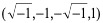
Define a cyclic field of curl operators by: “”
a. Where:  ; n = 1,2,3,…
b. Where one cycle is defined by:
 =
=  .
.
c. Where:  =
=
t = t0 = 
t = t0  =
= 
9.
Define 4 curl operators for real space-time (); 4 for imaginary
space-time ():

 k =
k =  x
x 

10.
Define the group of real and imaginary operators as ““ :
Where: n = 1, 3, … Odd numbers =
Imaginary operators;
n = 2, 4, … Even
numbers = Real operators.
 = (
= (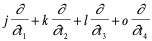 )
)  . Where: “” is relativistic space.
11.
Group operators “ ” according to real
numbers (a and b);
imaginary numbers (c and d):
a. ( )0 = , – ; b.
  i = , – .
c. i = , – ; d. ()i = , – .
12. From “a” and “b”
in No. 11, let: v = v , for “j” and “k”; let: v = 0, for “l” and “o”.
Construct equations:
a.
()0 – 1 ; b. i – 1